
IWW Water Research Institute
IWW Water Research Institute is one of Germany’s leading institutes for research, consultancy and professional development in the field of water. We undertake projects ranging from regional contexts to Europe-wide research collaborations, in which we also perform overarching coordination tasks. Our colloquia, conferences and training courses offer excellent opportunities to learn about the latest research findings and new knowledge and to apply them in practice. Thanks to our network and participation in various committees, we are always up to date, possess a high level of expertise in the field of water and offer well-founded, state-of-the-art solutions.

Our EU Research Projects

The B-WaterSmart project accelerates the transformation to water-smart economies and societies in coastal Europe and beyond by focusing on sustainable and cost-effective solutions for the optimal use of water, using smart technologies and circular economy approaches.
Background & Objectives
How can water availability be increased in water-scarce regions? How can the concept of a circular economy be embedded within the water sector? What smart, digital solutions can be deployed to help create a water-smart economy and society?
The answers to these questions are based on case studies that examine specific challenges in six European cities and regions. Water utilities from Alicante in Spain, Bodø in Norway, Flanders in Belgium, Lisbon in Portugal, East Frisia in Germany and Venice in Italy are involved as living laboratories. Together with research partners and local technology providers, they are developing and demonstrating solutions to the above-mentioned questions.
Project website: https://b-watersmart.eu/
Project partners
adelphi, ADENE, AdTA, Aguas de Alicante, Aquafin, baseform, Bodø Kommune, Cetaqua, CML, De Watergroep, Depuracque, DMK, ENG, EnviroChemie, ETRA, Eurecat, Hydrotech, ICCS, ICS-UL, Krüger Kaldnes, KWR, LNEC, Mechelen, Nordkontakt, NTNU, OOWV, Proefstation, SINTEF, TECHNI, Turbulent, UNED, Veritas, VITO, Water Europe
Funding
Funded by the European Union under grant agreement No. 869171.
Titled “A revolutionary approach to maximising the reuse of process water and resource recovery through a smart, circular and integrated solution”, the R3VOLUTION project is revolutionising industrial water management in the EU by developing solutions for different industry cases.
Background & Objectives
The R3VOLUTION project addresses these challenges by developing innovative, economically viable solutions for industrial water, solvent and energy recovery. Over four years, the project demonstrates membrane-based treatment systems combined with waste heat utilisation and a digital process assistant across four pilot sites in the petrochemical, bio-based chemical, steel, and pulp and paper industries.
Project website: https://r3volution.eu/
Project partners
Funding
Funded by the European Union under grant agreement No. 101138245.
The main objective of the CIRSEAU project is to establish a collaborative water ecosystem that generates strong synergies between various stakeholders in the circular water economy.
Background & Objectives
The previous CIRSEAU cluster analysed results from 35 demonstration sites to foster synergies and support a more circular European water ecosystem. Its activities addressed key challenges such as reducing water consumption, increasing efficiency, recovering valuable resources, lowering greenhouse gas emissions and strengthening climate resilience, complemented by joint briefings and public outreach.
Now funded as a 36‑month Coordination and Support Action (CSA) by the European Research Executive Agency, CIRSEAU focuses on improving market uptake, collaboration and knowledge exchange. Through training, stakeholder engagement and standardisation efforts, the project tackles social and regulatory barriers and develops a roadmap for sustainable resource and energy management, supporting the transition to a circular, climate‑neutral water economy by 2050.
Project website: https://cirseau.eu/
Funding
Funded by the European Union under grant agreement No. 101135403.
The aim of the Upwater project is to understand groundwater pollution in order to protect and improve water quality by providing tools and strategies to implement safe and contaminant-free recharge water into aquifers.
Background & Objectives
The main objective of the project is to improve understanding of the sources and pathways of pollution affecting groundwater quality, in order to develop effective preventive measures at source and thus protect groundwater bodies in the EU. A second objective is to reduce the ingress of pollutants into the aquifer through the use of innovative, bio-based solutions. To achieve this, interim objectives have been set to develop and validate monitoring and analytical methods, source attribution and hydrogeological modelling, risk assessment and, finally, collaborative decision-making for future groundwater management.
Project website: https://www.upwater.eu/
Project partners
Funding
Funded by the European Union under grant agreement No. 101081807.
The DESSIN project demonstrated innovative solutions for water scarcity and quality challenges and developed a framework to assess ecosystem service changes.
Background & Objectives
Driven by Europe’s urgent need to address water quality issues and increasing water scarcity, innovation in the water sector is advancing faster than the supporting scientific frameworks. Existing methods for evaluating the impact of these innovative solutions are still limited and largely theoretical, restricting their practical application and usefulness for water professionals. As a result, the adoption of new technologies and management approaches is slowed, leading to missed opportunities for improving resource efficiency, protecting ecosystems, and generating broader societal and economic benefits.
To bridge this gap, the DESSIN project developed a framework designed to assess changes in ecosystem services (ESS) resulting from technical or management interventions at the level of water bodies, sub-catchments, or entire catchments.
Project partners
adelphi, Aigües de Barcelona, Amphos, Bruine de Bruin, Cetaqua, Chemitech, DHI, ecologic, Emschergenossenschaft, Eydap, Inrigo, KWR, LKI, NTUA, Oslo kommune, Secno, SINTEF, Telint, UFT, Universität Duisburg-Essen
Funding
Funded by the European Union under grant agreement No. 619039.
Results & Publications
Download: The DESSIN framework for ecosystem services (ESS) helps decision-makers make the best choice by assessing the impacts of innovative solutions on freshwater ecosystems and their services (brochure).
Download: The DESSIN final magazine, featuring all project results. It provides an overview of the key findings and the solutions that were tested and validated at the DESSIN demonstration sites in Norway, Spain, Germany and the Netherlands. It also presents the DESSIN tool for assessing ecosystem services.
Publication: “Getting into the water with the Ecosystem Services Approach: The DESSIN ESS evaluation framework.” From the abstract: “Driven by Europe’s urgent need to tackle the challenges of water quality and water scarcity, the pace of innovation in the water sector is outstripping that of science. The methods available for assessing the impact of innovative solutions on water-related challenges remain limited and highly theoretical, which restricts their application and usefulness for water sector professionals.” https://www.sciencedirect.com/science/article/pii/S221204161730342X?via%3Dihub
Publications: A special issue of the journal *MDPI Water* from 2017 on the topic of ‘Managed Aquifer Recharge’ (MAR) examines hydrogeochemistry and water quality, including benefits such as self-purification and challenges such as interactions between water and aquifers and system clogging. Papers from the demonstration sites in Barcelona and Westland have been accepted for publication: ‘Evaluation of Clogging during Sand-Filtered Surface Water Injection for Aquifer Storage and Recovery (ASR): Pilot Experiment in the Llobregat Delta (Barcelona, Spain)’: https://www.mdpi.com/2073-4441/9/4/263 & “The Impact of Integrated Aquifer Storage and Recovery and Brackish Water Reverse Osmosis (ASRRO) on a Coastal Groundwater System”: https://www.mdpi.com/2073-4441/9/4/273
Publication “Governance Regime Factors Conducive to Innovation Uptake in Urban Water Management: Experiences from Europe”: Several project partners have published an open-access article on governance factors that promote innovation in urban water management. In view of ageing infrastructure and new societal demands, innovative approaches are required. The study develops a framework for assessing governance structures and applies it to three European case studies to demonstrate how governance influences the adoption of new technologies and change within urban water systems: https://www.mdpi.com/2073-4441/8/10/477
The European research project STOP-IT focused on the strategic, tactical and operational protection of critical water infrastructures against physical and cyber threats.
Background & Objectives
Water infrastructures are essential for human society, life and health. They can be endangered by physical or cyber threats with severe societal consequences. To protect them, STOP-IT brought together a strong team of 23 partners from across Europe and Israel to develop solutions to the most pressing threats. The team identified risks and co-developed an all-hazards risk management framework for the physical and cyber protection of critical water infrastructures.
Project partners
Aigües de Barcelona, Aplicatzia, Atos, Bergen kommune, Berliner Wasserbetriebe, Cetaqua, De Watergroep, EMASAGRA, Eurecat, Hessenwasser, ICCS, KWR, Mekorot, mnemonic, Oslo kommune VAV, Oylo Trust Engineering, PNO, RISA Sicherheitanalysen, SINTEF, Technion, Water Europe, Worldsensing
Funding
Funded by the European Union under grant agreement No. 740610.
Results & publications
The STOP-IT platform: Secure your water infrastructures against cyber-physical attacks and threats with the STOP-IT platform, which supports strategic/tactical planning, real time operational decision making and post-action assessment for the key parts of the water infrastructure. The platform is:
- scalable (scaling from small utilities to large ones)
- adaptable (including various modules addressing different needs, with expandability for future modules) and
- flexible (the water utility managers can decide how to use it and it will be usable by experts, novices, and even non-technical staff.
The main added value of the platform is that all modules and tools are integrated, connected to each other and interoperable, therefore ensuring the protection against combined cyber-physical threats and allowing the analysis of cascading effects of physical and cyber events. The platform was validated in an operational environment and all solutions were demonstrated in real environments. The STOP-IT platform is explained in this Youtube-Video.
Downloads STOP-IT platform: The factsheet, the brochure, and the graphic.
This is only a very small selection of our research projects. More national and international projects can be found on our German website: https://iww-wasserforschung.de/forschungsprojekte/
Our departments
Our business departments offer comprehensive expertise across the entire water sector, drawing on 40 years of experience, gained both in Germany and internationally. We are active involved in research, always staying ahead of latest technologies and innovative solutions. Furthermore, we frequently engage in interdisciplinary collaboration to deliver the best outcomes.
Management & Research Coordination
Since April 2023, the IWW Water Research Institute is headed by Dr. Kristina Baillot. A graduate in industrial engineering, she has been working with IWW in various roles for over 10 years. She is supported in the management of the institute by a Scientific Board. She is also responsible for the Research Coordination and therefore is the central internal point of contact for all enquiries relating to the acquisition and implementation of research projects, ranging from basic research to applied research.
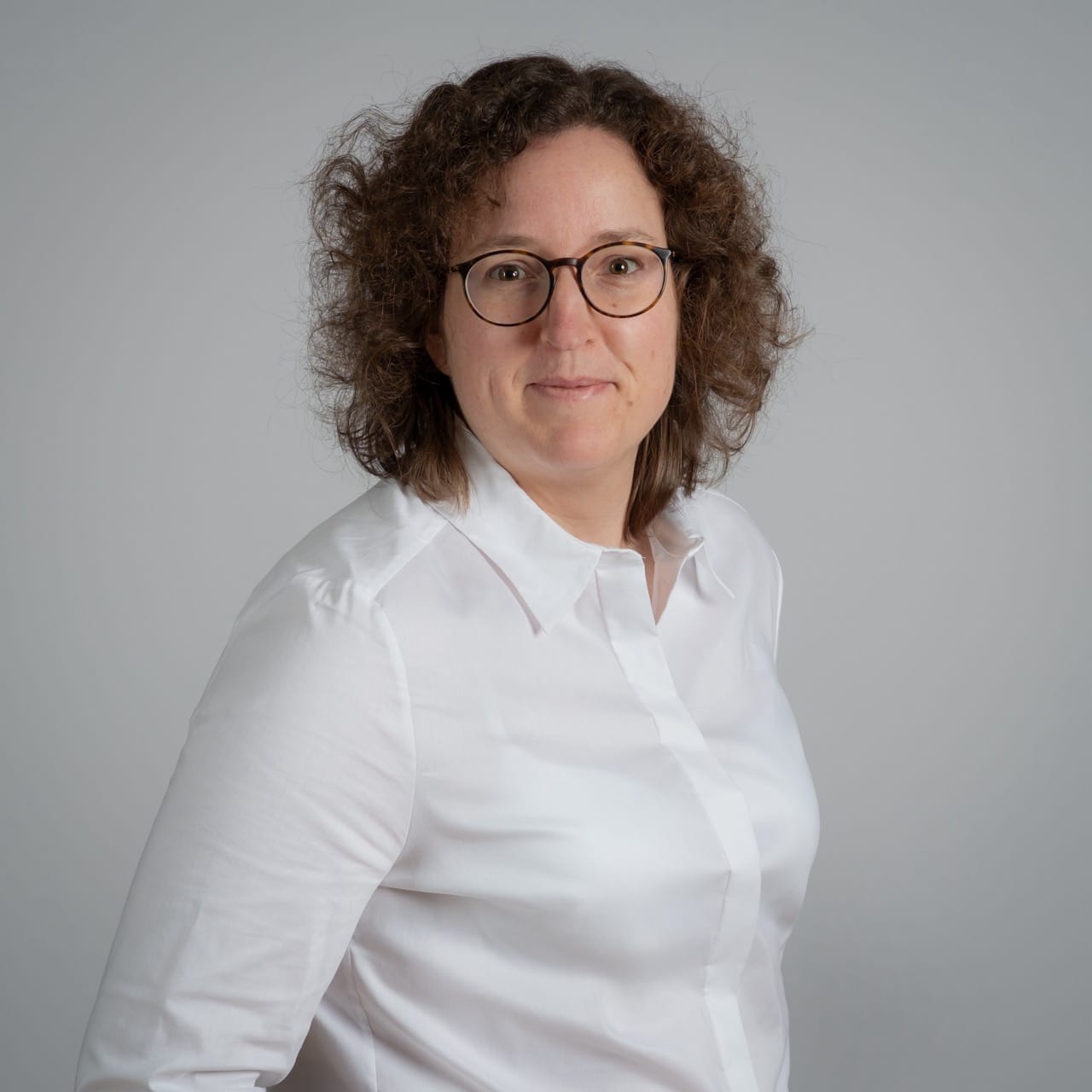
Dr. Kristina Baillot
Applied Microbiology
The Applied Microbiology division addresses microbiological and ecological issues in water, considering the complex interrelationships between microorganisms, water quality, surfaces and environmental conditions. This includes natural and engineered water systems (groundwater, surface water, drinking water, process water, service water, cooling water and wastewater).
Dr. Andreas Nocker
Stv. Bereichsleiter
+49 208 40303 383
a.nocker@iww-online.de
Water Economics & Mangement
Our civil and environmental engineers work alongside our economists to provide consultancy and conduct research specifically at the technical-economic interface of water-related issues. We frequently tackle our projects in an interdisciplinary manner, collaborating with experts from other IWW Water Research Institute departments or external partners, thereby integrating the diverse perspectives of the various specialist fields.

Dr. Leonid Kadinski
Head of Department
+49 208 40303-340
l.kadinski@iww-online.de
Water Resources Management
Climate change, conflicts over water use, trace substances and nitrate. The challenges facing public water supply are greater now than ever before. The Water Resources Management department conducts targeted research and provides science-based advice on these and other future-oriented topics. The focus is always on the holistic and sustainable management of water as a resource.
Dr. Tim aus der Beek
Head of Department
+49 208 40303-234
t.ausderbeek@iww-online.de
Water Technology
Our Water Technology department offers targeted technical consultancy and development, pilot-scale testing, and process engineering analysis. We have a wide range of test and pilot plants at our disposal and possess many years of experience with all water treatment processes and their combination. We are also experts in corrosion.

Volkmar Keuter
Water Analytics
We investigate the chemical composition of water in environmental, industrial and drinking water. Our aim is to detect substances that are often present only in trace amounts but are crucial for environmental quality, public health and technical processes, including PFAS, pharmaceutical residues, pesticides, and numerous other organic and inorganic substances. We adapt existing methods or develop new analytical techniques to deliver precise, reliable and research-relevant results. This enables us to respond quickly to new developments and address current challenges in the water sector with a sound scientific basis.

Hannes Schlottmann
Research Associate
+49 208 40303-385
h.schlottmann@iww-online.de
Our networks

The IWW Water Research Institute is an affiliated institute of the University of Duisburg-Essen and a member of the DVGW Institute Network. As a member of the Johannes Rau Research Association, IWW receives funding from the State of North Rhine-Westphalia. The institute also is part of a global network of academic institutions, industrial R&D organisations, technology firms, standards bodies, associations and public authorities. At European level, IWW is active in numerous research networks, including the Aqua Research Collaboration, the NORMAN network and Water Europe.